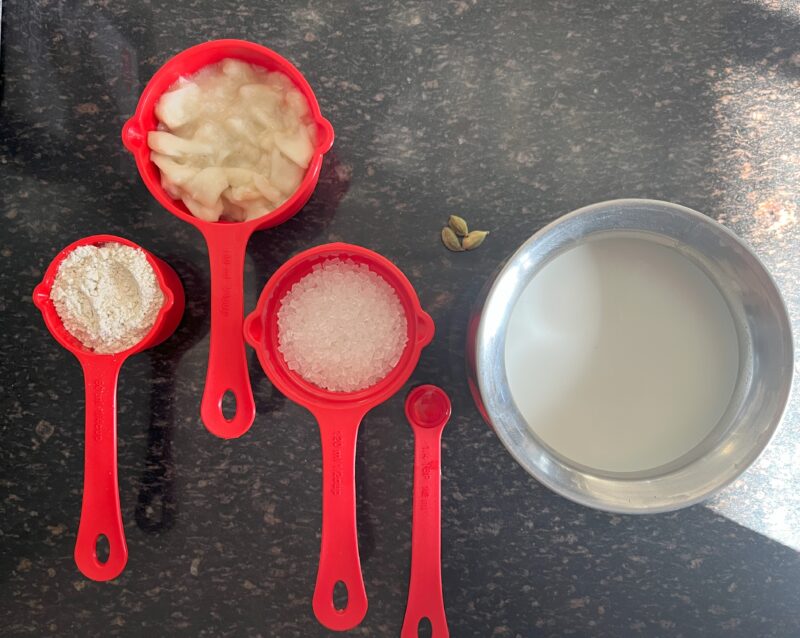
| Ripe custard apple | 2, large |
|---|---|
| Green cardamom | 3 to 4 |
| Salt | a pinch |
| Milk, full cream | 3 cups |
| Barnyard millet flour | 2/3 cup |
| Vinegar/ Lemon juice | 2 to 3 teaspoons |
| Sugar | 1/2 cup |
| Ghee, for greasing | 1 teaspoon |
| Mixed nuts, chopped | handful (for garnishing) |
What You Will Need
A heavy-bottomed kadhai/pan, silicone spatula, turner, measuring spoons and cups, mould/container, blender, mortar and pestle
Instructions
Begin by separating the seeds from the pulp of the custard apple and purée the pulp in a blender. Then pound the green cardamoms using a mortar and pestle, along with a little salt, to form a smooth powder.
Heat the heavy-bottomed pan and add in the milk.
Constantly stir the milk at a medium flame until it reaches the point of boiling.
Once it reaches boiling point, gradually add the barnyard millet flour and stir continuously. It is essential to keep stirring so as to avoid any lumps being formed.
After cooking the milk to a thick creamy consistency, add in the vinegar/lemon juice and mix thoroughly. The milk will slowly start to curdle.
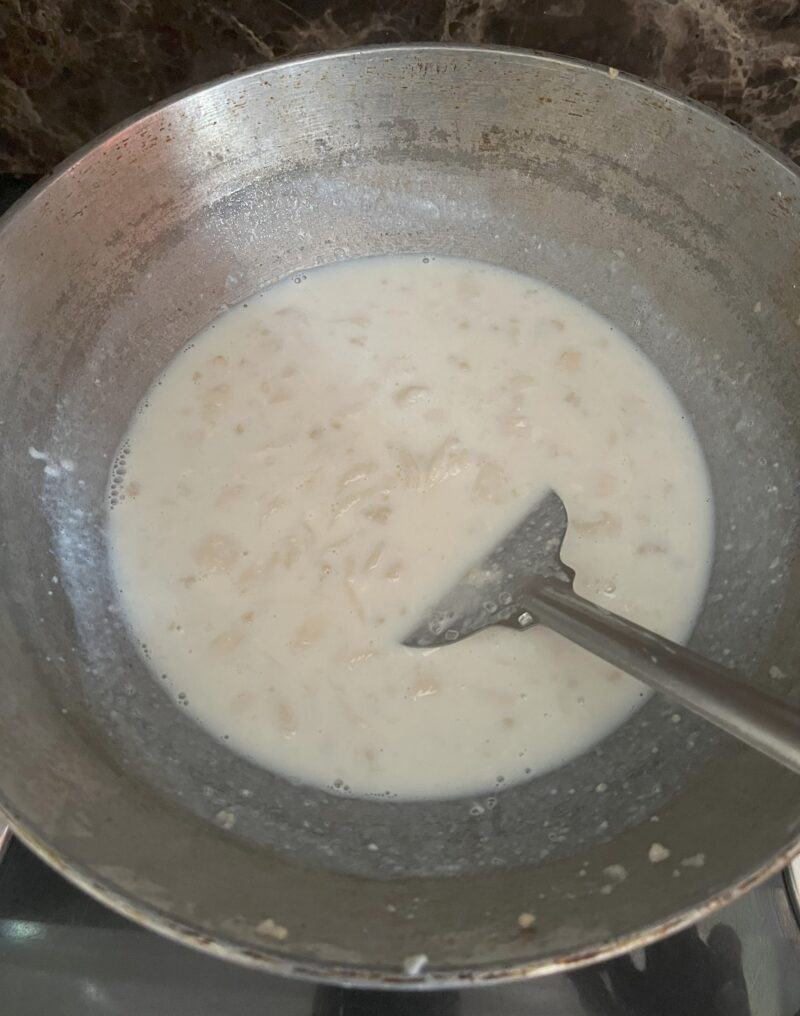
Next, incorporate the puréed custard apple and sugar. Keep stirring the milk constantly.
At last, add the crushed green cardamom to the milk base and continuously stir until it forms a thick paste-like consistency.
When it starts to leave the bottom of the pan while stirring, the kalakand is ready.
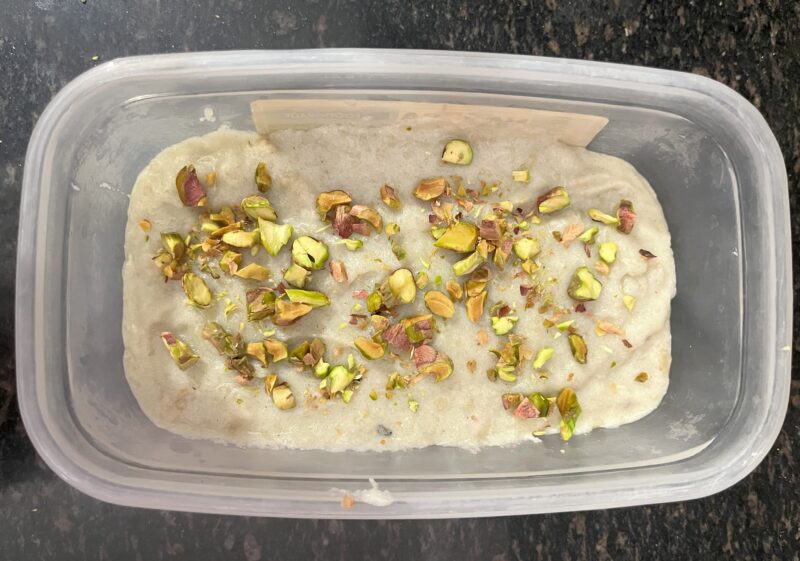
Once done, switch off the flame and transfer the mixture into a ghee-greased mould/container for it to set. Smoothen the edges and surface using a silicone spatula.
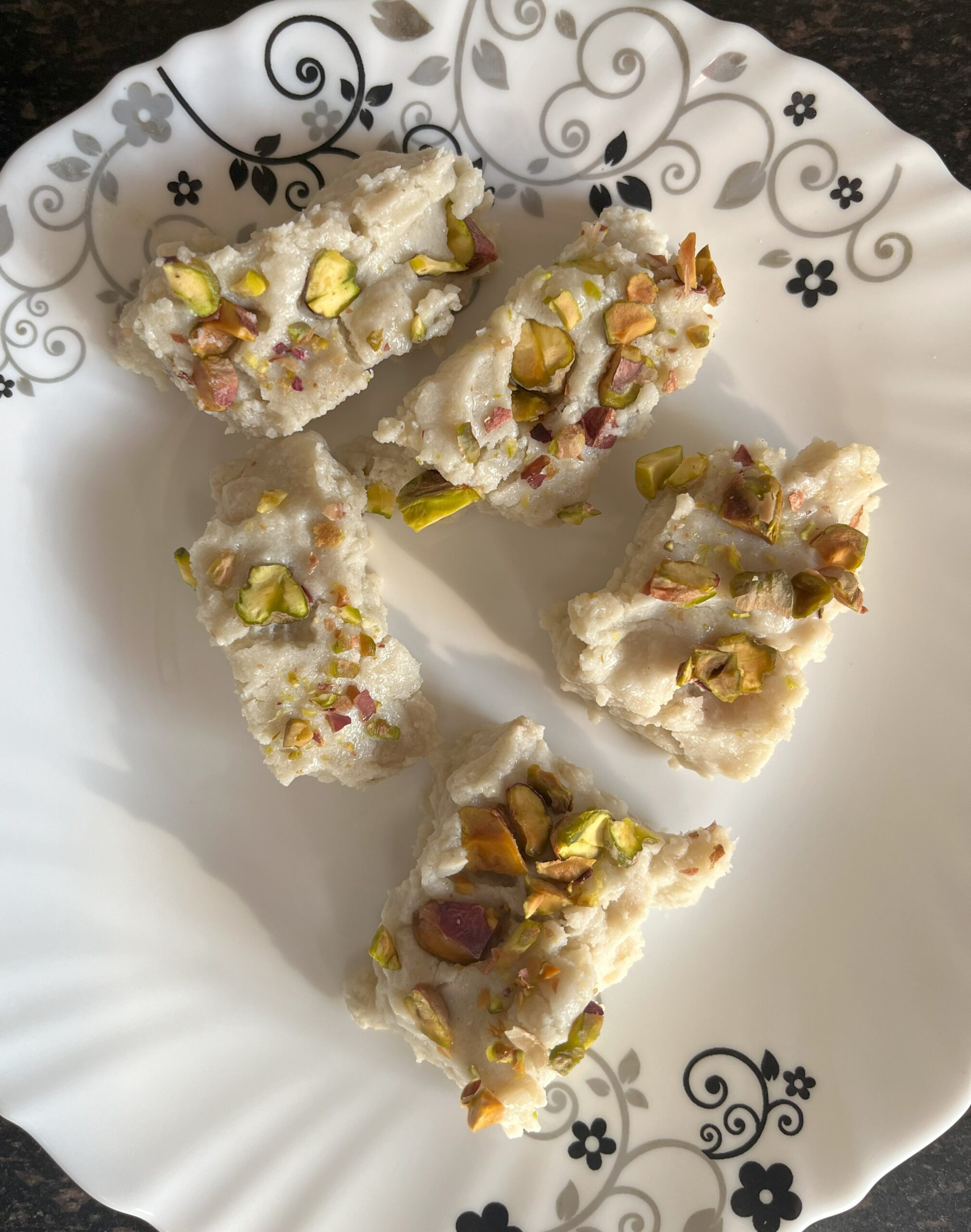
Garnish with chopped nuts of your choice. Refrigerate or let the kalakand cool down to room temperature completely. Cut into squares and serve.
Tips:
- It is extremely essential to continuously stir the whole mixture and milk all the time to avoid any lumps or milk sticking to the bottom and to achieve the desired texture.
- The gas mark needs to be on medium-to-high heat during the entire process for smooth, timely cooking. This can also be used to give a brownish caramelised tinge to the kalakand, if one desires.
- Use a heavy-bottomed vessel or else the milk might burn.
Variations:
- Use barnyard millet grains instead of the flour. The flour gives a fudge-like texture to the kalakand. But to acquire a traditional grainy consistency for the kalakand, cook the millet grains separately, strain, grind coarsely, and then add to the milk.
- To sweeten, use jaggery powder or coconut sugar for a healthier alternative.
- Experimenting with spices like saffron can add a different flavour to the dish. In that case, do not use the custard apple.
- Seasonal fruits such as mango, strawberries, ripe jackfruit or sapodilla (chikoo) can also be used to make the fruit kalakand.
Twinkle Suri is a food technologist who was working as a research scientist for an FMCG before switching to the role of a home chef. From the lab to her home kitchen, her experiments with food can be found at myebrew.com.
You must be logged in to rate this recipe.
 Login with Google
Sign in with email